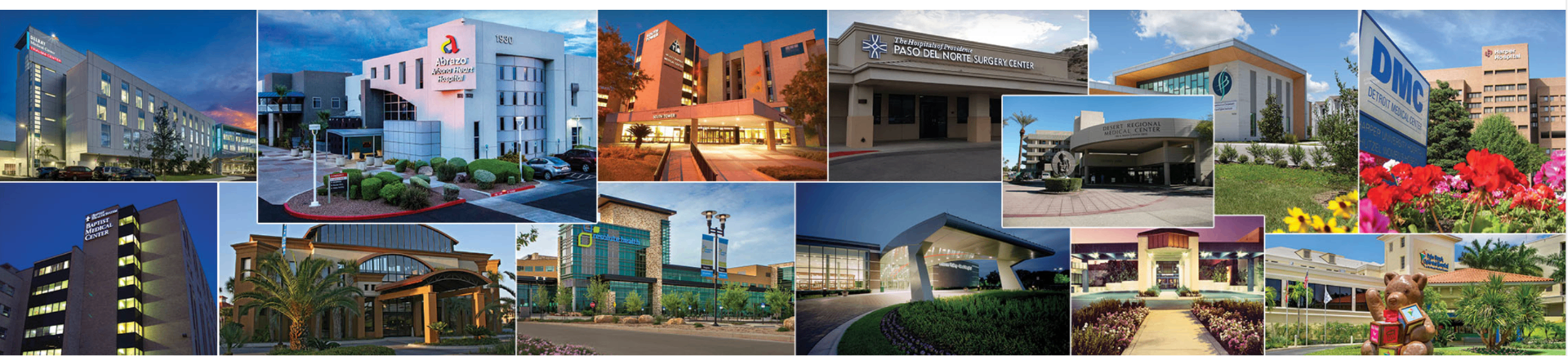
Tenet Healthcare — Enterprise Oracle Health Millennium Transformation
One connected patient record across every Tenet facility.
Client
Tenet Healthcare
Role
Senior Healthcare Systems Consultant
Duration
Ongoing multi-wave rollout
Scale
Senior Healthcare Systems Consultant
Focus
Enterprise Multi-Site Transformation
Executive Outcome
One connected patient record across every Tenet facility.
Project Overview
Supported enterprise Oracle Health Millennium implementations across multiple Tenet Healthcare facilities by standardizing clinical and revenue cycle workflows, aligning enterprise configuration strategies, and coordinating multi-site deployment activities while maintaining continuity of patient care and financial operations.
Completed enterprise workflow discovery, HIM optimization, DNFB automation, and Revenue Cycle standardization.
Day-one native Oracle Health + Oracle Fusion Cloud install on a $300M greenfield facility (opened July 2024). Owned the HL7 bridge between Cerner and Conifer billing, DNFB deficiency logic, CDM mapping, and ROI compliance architecture — replicating the standardized Tenet playbook with a new set of integration points.
Completed ambulatory surgery center workflow optimization, coding validation, and operational stabilization.
Supported greenfield hospital build, integrated testing, activation, and enterprise go-live.
Metrics
Enterprise delivery footprint at a glance — sites, applications, integrations, and stakeholder scale.
Timeline
Multi-wave delivery timeline from discovery through hypercare, plotted in relative program months.
Facilities
Each facility below anchors a delivery wave with its own workflow, integration, and activation profile.
Challenges
Tenet operates a national footprint of acute-care and specialty facilities running heterogeneous legacy platforms. Fragmented clinical documentation, inconsistent revenue cycle configuration, and manual reconciliation across sites created data silos, claim leakage, clinician documentation fatigue, and elevated compliance risk. Two greenfield hospitals opening back-to-back added the further constraint of activating a full Oracle Health estate on day one, with no legacy fallback.
- Standardize clinical + revenue cycle workflows across subsidiaries
- Eliminate DNFB backlog driven by missing physician signatures
- Enable day-one greenfield activations without legacy fallback
- Integrate Oracle Health with Conifer billing and payer edits
- Reduce enterprise denial rate and accelerate cash cycle
- Meet CMS CoP and Joint Commission chart-completion windows
Architecture
Delivery pillars spanning solution strategy, application configuration, integration, testing, governance, and operational optimization.
Partnered with executive sponsors, operational leaders, clinical stakeholders, and revenue cycle teams to evaluate current-state workflows, identify enterprise standardization opportunities, and align Oracle Health solution strategies with organizational objectives.
Designed, configured, validated, and optimized Oracle Health Millennium applications supporting Patient Accounting, Registration, Scheduling, Charge Services, and enterprise clinical workflows across multiple healthcare facilities.
Supported enterprise interoperability initiatives through HL7, FHIR, APIs, and third-party integrations while validating workflow continuity across clinical and revenue cycle systems.
Directed implementation readiness through workflow validation, SIT, UAT, defect management, cutover planning, production readiness, and Go-Live support across multiple deployment waves.
Collaborated with executive sponsors, Oracle delivery teams, revenue cycle leadership, clinical operations, IT departments, and third-party vendors to maintain governance, executive communication, and enterprise implementation alignment.
Performed workflow assessments, production issue resolution, reporting, root-cause analysis, and continuous optimization initiatives supporting enterprise application performance and operational excellence.
Workflow
How the engagement moved from current-state discovery to production optimization, and how daily operations changed as a result.
- 01Discovery
- 02Workflow Analysis
- 03Enterprise Design
- 04Configuration
- 05Integration
- 06System Integration Testing
- 07User Acceptance Testing
- 08Cutover
- 09Go-Live Support
- 10Production Optimization
Missing physician signatures hold up coding, keeping claims in "Discharged Not Final Billed" status.
Automated alerts significantly accelerate chart sign-offs, shortening the time to clear claims and speeding up cash flow.
Clerks manually track down physicians via phone, email, or physical folders.
System manages the tracking loop, reducing administrative hours needed for manual chart quality checks.
Delayed completions risk Medicare Conditions of Participation (CoP) or Joint Commission violations.
Automatic tracking ensures charts are completed within the legally mandated 15–30 day window.
Staff physically print, copy, and mail large physical patient files.
Drastically lowers paper and shipping overhead via encrypted digital retrieval and automated batch e-delivery.
Deliverables
Governance, design, and activation artifacts owned or co-authored across the engagement.
Results
Value delivered — measured operationally, financially, and organizationally.
Standardized Oracle Health workflows across multiple hospitals while maintaining operational flexibility.
Supported phased enterprise deployments with minimal disruption to clinical and financial operations.
Improved collaboration between operational, clinical, and revenue cycle teams through standardized enterprise workflows.
Established repeatable implementation methodologies supporting future deployment waves across the enterprise.
Lessons Learned
Delivery insights carried forward to future waves and future engagements.
Greenfield activations succeed when the HL7 integration fabric is designed as a first-class deliverable — not a downstream task after clinical build.
Physicians adopt Deficiency Management when alerts arrive inside their existing Message Center rhythm; separate portals get ignored.
Enterprise standardization is a governance problem before it is a configuration problem — baseline the workflow, then baseline the build.
Executive ROI dashboards published within 60 days of go-live convert operational skeptics into program champions.
Concurrent multi-site rollouts require a shared cutover command center and a single RAID log — one truth beats federated status reports.
A repeatable enterprise playbook for Oracle Health at scale.
This engagement matured a repeatable playbook for delivering Oracle Health Millennium across a national health system — spanning greenfield activations, brownfield conversions, and specialty-site optimizations. It sharpened enterprise governance, clinician engagement, revenue integrity, and cross-vendor integration leadership on a program portfolio exceeding $800M.
Appendix
Methodology, frameworks, terminology, references, and acknowledgements underpinning this engagement.
Hybrid delivery model — Waterfall governance for cutover, activation, and audit compliance; SAFe cadence for build, configuration, and iterative testing. Clinically Driven Revenue Cycle (CDRC) framework anchored physician engagement and revenue integrity design.
- ◇PMI PMBOK — Program & Risk Management
- ◇SAFe 6.0 — Iterative Build & Test
- ◇Oracle Health Model Experience — Baseline Workflows
- ◇CDRC (Clinically Driven Revenue Cycle)
- ◇ITIL v4 — Hypercare & Incident Management
- ◇Tenet Enterprise CIO & CMIO
- ◇Facility Clinical Operations Leads
- ◇Revenue Cycle Directors
- ◇Oracle Health Delivery Team
- ◇Third-party integration partners (HL7 / interface vendors)
- DNFB
- Discharged Not Final Billed — accounts held from billing pending clinical documentation completion.
- CDRC
- Clinically Driven Revenue Cycle — Oracle Health methodology linking clinical documentation directly to charge capture.
- ROI
- Release of Information — regulated process for sharing patient records with payers, providers, and patients.
- CDM
- Charge Description Master — enterprise catalog mapping clinical activity to billing codes.
- CoP
- Medicare Conditions of Participation — federal chart-completion and compliance standards.
- Oracle Health Millennium Model Experience — Enterprise Reference Architecture
- CMS Conditions of Participation §482.24 — Medical Record Services
- The Joint Commission Record of Care Standards (RC.01)
- HL7 v2.x / FHIR R4 Integration Specifications
- ANSI X12 5010 — Institutional & Professional Claims
Delivered in partnership with Tenet Healthcare enterprise leadership, Oracle Health delivery teams, Conifer Health Solutions, and facility-level clinical, HIM, and revenue cycle stakeholders.